


Hot water feels steady one day and then swings from too cool to too hot the next. That jumpy behavior often points to a mixing valve that no longer holds its setting. A mixing valve blends very hot water from the tank with cold water to deliver a safe, steady temperature at the tap. As parts wear or scale builds up, the setpoint drifts. Showers turn into a guessing game and dishwashing takes longer. Homes in Metairie, New Orleans, and nearby neighborhoods see this more often after seasonal changes, remodel work, or water heater replacements that reuse old valves. This guide explains clear symptoms, practical checks, cleaning steps, and calibration methods that restore stable hot water without guesswork.
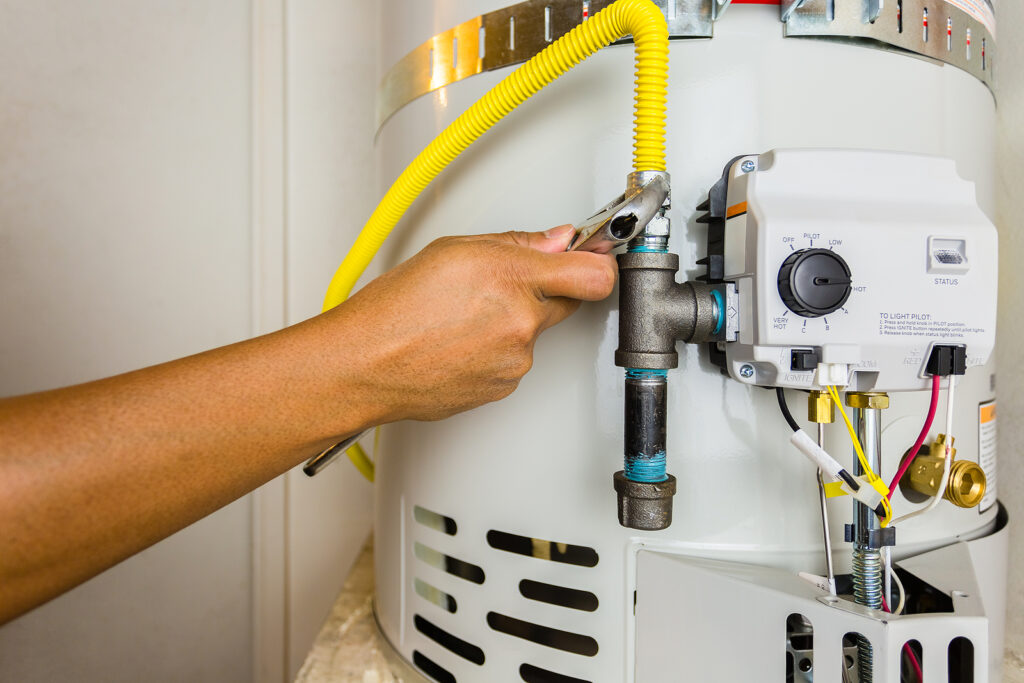
What A Mixing Valve Does And Why Drift Happens
A thermostatic mixing valve sits at the hot water outlet or near the recirculation line. Inside the body, a temperature-sensitive element opens and closes small passages to blend hot and cold to a target, often near 120°F at the fixtures. Drift starts for a few common reasons:
- Mineral scale coats the internal shuttle and slows response.
- Debris from pipe work or a failing anode collects on screens and check valves.
- Worn wax elements or springs lose tight control and overshoot the target.
- Cold-side check valve failure lets hot water push back into the cold line and upsets the blend.
- Recirculation loop heat prewarms the cold inlet to the valve and raises outlet temperature.
- Dip tube issues in the tank reduce true hot water supply and force the valve open too far.
Fixing drift starts with a simple diagnosis you can do at home with a cup thermometer and a notepad.
Clear Signs Your Valve No Longer Holds Temperature
Spot the pattern before parts fail:
- Showers start warm, turn hot, then swing cool without touching the handle
- Taps never reach the same temperature twice during the day
- Water feels fine at a nearby bath but runs cool in the kitchen, or the other way around
- Recirculation lines feel hot at the water heater even when fixtures sit idle
- Single-handle faucets send lukewarm water in both the hot and cold positions
- Turning the tank thermostat higher barely changes temperature at the tap
The last sign often points straight at a mixing valve that blocks true tank temperature from reaching your fixtures.
Quick Checks Before You Grab Tools
A few fast observations save time later:
- Measure at the farthest fixture. Run hot water for two minutes, then hold a kitchen thermometer in the stream. Write down the reading every 30 seconds for three minutes. A healthy system holds within a tight band.
- Touch test at the heater. Carefully feel the hot outlet pipe near the tank (use caution). That line should feel much hotter than the mixed line downstream of the valve.
- Listen for crossover. Turn off the cold supply to the water heater for one minute. Open a hot tap. Water should slow to a trickle. A steady stream hints at a cross-connection or failed check valve.
- Check the recirc pump. Many pumps run longer than needed and heat the cold inlet to the valve. Set the timer for shorter cycles or add a smart control during service.
These notes help a technician spot the cause fast and keep costs in line.
Safe Cleaning And Calibration Steps
Work slowly and keep safety first. Hot water can scald. Gas and electric equipment needs care. Call the Bienvenu Brothers if anything looks off.
- Isolate and depressurize. Close the cold and hot isolation valves around the mixing valve. Open a nearby hot tap to relieve pressure.
- Clean the screens. Remove the cold and hot inlet unions at the valve. Rinse the small screens and check valves. A toothbrush and warm water remove grit.
- Descale the cartridge. Many valves allow cartridge removal. Soak the cartridge in warm white vinegar for 20–30 minutes to loosen the scale. Rinse and inspect O-rings. Replace brittle seals.
- Reassemble with food-grade silicone on O-rings. Light lubrication helps parts seat without tearing.
- Set a safe baseline. Many pros store the tank at 140°F to protect water quality and then mix down to about 120°F at fixtures. Set the water heater first, then set the mixing valve.
- Calibrate with a thermometer. Open a nearby hot tap to a steady stream. Adjust the valve in small steps and wait 20–30 seconds between moves. Aim for 120°F at the tap.
- Confirm at the far fixture. Repeat the earlier temperature log. Readings should hold within a few degrees.
- Label the setting. Mark the valve body with a fine marker so you can spot drift later at a glance.
This routine fixes many unstable systems in one visit. If temperature still swings, the cause often sits outside the valve.
Issues That Mimic Valve Drift
Not every temperature swing comes from the valve body:
- A cracked dip tube in the tank sends lukewarm water to the outlet.
- Single-handle faucet crossover blends hot and cold inside the faucet even when closed. Isolate suspect fixtures during testing.
- Recirc loop without a proper check pushes hot water into the cold main and raises inlet temperature at the valve.
- Wrong pump settings run hot water through the loop all day and overheat the “cold” side of the valve.
- Undersized piping or long runs cause long wait times and give the sense of drift when the valve holds steady.
A short diagnostic with isolation valves and a thermometer sorts these out quickly.
Recirculation Tips That Keep Hot Water Steady
Many New Orleans homes use recirculation to cut wait time at distant baths and kitchens. That loop needs a few details to play nicely with a mixing valve:
- Add a check valve on the cold inlet to the mixing valve so loop heat cannot flow backward.
- Balance the return line so the pump does not shortcut to the heater and ignore distant branches.
- Use a timer or smart control so the pump runs during busy hours and rests at night.
- Insulate the loop to hold temperature without raising the cold inlet at the valve.
These small changes protect comfort and reduce energy waste.
When Repair Gives Way To Replacement
A valve with a cracked body, a seized cartridge, or worn internals that no longer respond needs replacement. Match the new valve to your system:
- Choose a model rated for whole-home tempering at the heater outlet.
- Confirm fittings match your piping and recirc layout.
- Look for service tees and union connections for easy future cleaning.
- Install new isolation valves on both sides if the current ones stick.
Bienvenu Brothers stocks common valve sizes, rebuild kits, and union fittings so your home regains steady hot water the same day.
A Maintenance Plan That Fits Our Climate
Humidity, frequent summer storms, and seasonal use patterns ask a lot of domestic hot water systems. Simple habits keep the blend steady:
- Flush the tank yearly to remove sediment that starves the valve of true hot water.
- Clean mixing valve screens during that same visit.
- Test and log temperature at a bath and the kitchen each quarter.
- Service the recirc pump and confirm the check valve seals.
- Change faucet aerators that clog and reduce flow, which can exaggerate swings.
Small steps keep showers safe and dishes easy to rinse without cranking handles back and forth.
Safety Notes Worth Repeating
Scalds happen fast. Always test water at a bath after service. Families with children or seniors benefit from a steady 120°F at the tap. Store higher in the tank only with a reliable mixing valve that a technician has calibrated. Gas work, electrical connections, and sealed combustion areas demand trained hands. A quick call saves time and protects the home.
FAQs
1) What causes sudden hot and cold swings after a new water heater is installed?
Debris often hits the mixing valve screens during install. The valve then loses control. A short clean and reset brings stability back.
2) How do I know the issue sits in the valve and not the tank?
Take temperatures at the farthest tap and compare with the hot outlet at the heater. A big gap points to the valve or a crossover, not the tank.
3) Can I set my water heater higher and rely on the valve for safety?
Yes, with a healthy, calibrated valve. Many homes store at 140°F and deliver near 120°F at fixtures. Test with a thermometer to be sure.
4) Why does recirculation make drift worse?
The loop can warm the cold side of the valve. A check valve and balanced flow keep the blend stable.
5) How often should I service the mixing valve in Metairie and New Orleans?
Plan a yearly clean and test. Local water conditions and storm sediment can push that up to twice a year in homes with heavy use.
Call Bienvenu Brothers at (504) 835-7783 for fast mixing valve diagnostics, cleaning, and calibration in Metairie and New Orleans.