


You set your thermostat to 72 degrees like you always do. The AC kicks on. You hear it running. The vents blow air. But an hour later, your house still sits at a sticky 78 degrees. You drop the thermostat to 70. Then 68. The temperature reading refuses to budge below 78 no matter what you do.
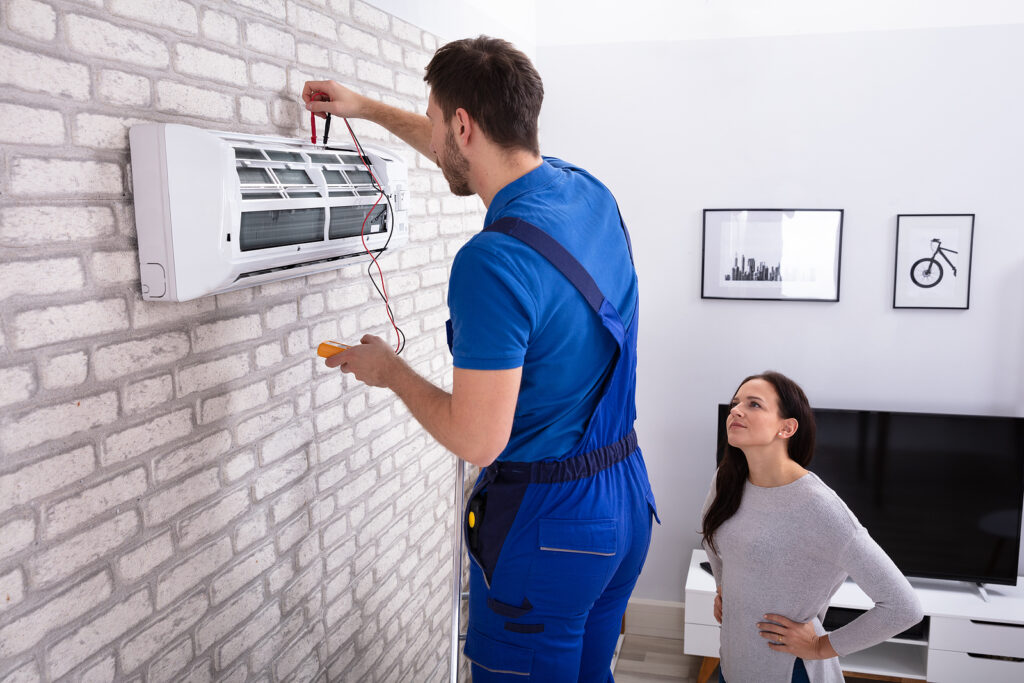
This problem hits New Orleans homeowners hard during May when outside temperatures climb into the low 90s and humidity makes everything feel 10 degrees hotter. Your AC runs constantly, your energy bill shoots up, and your home never quite reaches comfortable. Something is clearly wrong, but the system hasn’t quit completely, which makes diagnosing the problem trickier than a dead compressor.
This guide walks through the six most common reasons your AC runs but won’t cool below 78 degrees in Louisiana’s climate, what each problem looks like, and whether you can fix it yourself or need professional help. Most homeowners dealing with this issue have one of these problems, and catching it early prevents a complete system failure during the hottest weeks of summer.
Cause 1: Your Air Filter Is Completely Clogged
A dirty air filter is hands-down the most common reason ACs lose cooling power in New Orleans homes. Louisiana’s brutal pollen season runs from February through May. Oak trees dump massive amounts of yellow powder that coats everything, including the air your AC pulls into the system.
Your filter’s job is catching that pollen, plus dust, pet hair, and everything else floating around your house. A standard 1-inch filter should be replaced every 30 days during heavy use. Most homeowners forget. After 60 or 90 days, that filter looks like a fuzzy blanket instead of a screen.
A clogged filter chokes airflow. Your AC needs to move 400 cubic feet of air per minute for every ton of cooling capacity. When the filter blocks that airflow, your evaporator coil doesn’t get enough warm air passing over it to absorb heat effectively. The system runs and runs, but can barely lower the temperature by a few degrees.
Check your filter right now if you haven’t looked at it in over a month. Hold it up to the light. If you can’t see through it, it needs to be replaced immediately. This $15 fix often solves the whole problem. If replacing the filter doesn’t help within 2-3 hours of runtime, keep reading.
Cause 2: Low Refrigerant From a Leak Somewhere in the System
Refrigerant is the lifeblood of your cooling system. It doesn’t get “used up” like gasoline. The same refrigerant circulates through the system indefinitely unless you leak. Low refrigerant is the second most common reason ACs struggle to reach the set temperature in our area.
Signs of low refrigerant include ice forming on the copper lines running to your outdoor unit, the evaporator coil freezing over inside your air handler, or hissing sounds near either unit. Your system might cool fine when it’s 85 degrees outside but struggle when temps hit 92. That’s because refrigerant charge becomes more critical as outdoor temperatures rise.
Louisiana’s soil movement and ground settling stress refrigerant lines over time. We also see leaks develop at connection points where vibration gradually loosens fittings. AC repair technicians use pressure gauges to check refrigerant levels and electronic leak detectors to find the source.
You cannot fix this yourself. Refrigerant handling requires EPA certification and specialized equipment. A proper repair involves finding and fixing the leak, pressure testing the system, evacuating all air and moisture, then adding the correct refrigerant charge by weight. Simply topping off refrigerant without fixing the leak wastes hundreds of dollars and guarantees the same problem next year.
Cause 3: Your Outdoor Condenser Coils Are Packed with Debris
Walk outside and look at your condenser unit right now. See those thin aluminum fins covering the sides? Those fins need unrestricted airflow to dump heat from your home into the outside air. In New Orleans, they get clogged with cottonwood fluff, oak pollen, grass clippings, and that mysterious fuzzy stuff that appears every spring.
Dirty condenser coils reduce your system’s ability to reject heat. The refrigerant can’t cool down properly before cycling back inside. Your compressor works harder, draws more amperage, and generates excessive heat trying to compensate. The result is an AC that runs constantly but barely cools your home.
You can carefully spray the coils with a garden hose from the inside out to remove loose debris. Turn off the power at the disconnect box first. Use low pressure because those aluminum fins bend easily. Never use a pressure washer. For heavy buildup, professional coil cleaning with specialized chemicals works better and won’t damage the fins.
Most New Orleans area homes need condenser coil cleaning at least once per year, ideally in spring before the cooling season starts. Properties with heavy landscaping near the unit or lots of oak trees might need cleaning twice yearly.
Cause 4: Your AC System Is Simply Too Small for Your Home
This problem doesn’t develop overnight. It exists from day one but becomes obvious when you push the system during Louisiana’s hottest weeks. Air conditioners are sized in tons based on a detailed calculation called a Manual J that accounts for square footage, insulation, window area, ceiling height, and local climate.
A properly sized system for New Orleans’ climate should cool your home comfortably when outdoor temps hit 95 degrees. If your AC was undersized during installation, it might handle 85-degree days fine but struggle when temps climb higher. The system runs constantly because it literally cannot remove heat fast enough to overcome what’s entering through walls, windows, and doors.
You’ll notice this problem most during peak heat hours from 2 PM to 6 PM when your home bakes in the afternoon sun. Rooms with west-facing windows stay warmest. Your energy bills are consistently high because the system never shuts off.
Undersized equipment is a permanent problem requiring replacement with properly sized equipment. A qualified HVAC contractor will perform a proper Manual J calculation, not just estimate based on square footage. Expect to pay $4,000 to $8,000 for a new system depending on size and efficiency rating.
Cause 5: Your Ductwork Leaks Cooled Air Into the Attic
Your ductwork is the highway system carrying cooled air from your air handler to every room. Leaks anywhere along that highway waste the cold air you’re paying for. The U.S. Department of Energy estimates that homes lose 20 to 30 percent of cooling capacity to duct leaks.
New Orleans homes built before 1980 often have ductwork running through unconditioned attic spaces where temperatures reach 130 to 140 degrees in summer. Connections loosen over time from temperature cycling and house settling. Flexible duct develops holes with age. Metal duct joints separate at the seams.
Signs of duct leaks include rooms that never seem to cool properly, excessive dust accumulation, higher-than-normal energy bills, and visible gaps or disconnected sections in accessible ductwork. Your system might cool the hallway fine while bedrooms stay warm because the cold air escapes before reaching those rooms.
Sealing ductwork requires accessing it in your attic or crawlspace. Professional duct sealing uses mastic sealant and metal-backed tape rated for HVAC systems. That foam tape from the hardware store doesn’t cut it. Expect to pay $500 to $1,500 for professional duct sealing, depending on how much ductwork needs attention and how accessible it is.
Cause 6: Extreme Outside Temperature Pushes Your System’s Limits
Air conditioners are designed to maintain roughly a 20-degree difference between outdoor and indoor temperatures. This is a physics limitation, not a defect. When New Orleans sees those occasional 98-degree days in July, even a properly functioning AC struggles to cool your home below 78 degrees.
Your system was sized for design conditions based on local climate data. For New Orleans, that means maintaining 72 degrees indoors when it’s 92 degrees outside. When temperatures exceed design conditions, your AC simply cannot keep up with the heat load entering your home.
This isn’t actually a problem with your system. It’s a temporary capacity issue that resolves when temperatures drop back to normal ranges. If your AC only struggles on those handful of days per year when temps hit 96 or higher, and it cools fine the rest of the time, your system is working as designed.
Solutions include closing blinds during peak sun hours, running ceiling fans to improve air circulation, avoiding heat-generating activities like cooking on the stove during the hottest part of the day, and being patient. New Orleans typically sees these extreme temperature days less than 5 percent of the time during summer.
What to Do Right Now If Your AC Won’t Cool Properly
Start with the easiest checks first. Replace your air filter if it’s dirty. Clear debris from around your outdoor condenser unit. Make sure all supply vents throughout your home are open and not blocked by furniture. Verify your thermostat is set to cool mode and the temperature setting is actually lower than the current room temperature.
If those quick fixes don’t solve the problem within a few hours, you’re looking at refrigerant issues, equipment sizing problems, or duct leaks that require professional AC service. Don’t let this drag on for weeks. Running an AC system with low refrigerant or other problems causes additional damage to expensive components like the compressor.
The longer you wait, the worse it gets. A refrigerant leak that drops cooling capacity by 10 percent today becomes a frozen evaporator coil and damaged compressor next month. An undersized system running 18 hours per day wears out years faster than properly sized equipment cycling normally.
FAQs About ACs That Won’t Cool Enough
Why does my AC struggle only during the hottest part of the day in New Orleans?
Peak afternoon heat from 2 PM to 6 PM puts maximum stress on cooling systems when outdoor temperatures hit 92 to 95 degrees and your home absorbs sun through windows and walls. If your AC cools fine in the morning but struggles in afternoon, it’s either slightly undersized for peak conditions, has reduced capacity from dirty coils or low refrigerant, or you’re experiencing those rare extreme temperature days that exceed design conditions. New Orleans AC systems are sized to maintain comfort when outdoor temps reach 92 degrees. Higher temps push system limits. Close blinds on west-facing windows during peak sun to reduce heat gain.
How much does it cost to fix an AC that won’t cool below 78 in Metairie?
Simple fixes like replacing a dirty filter cost $15 to $30 if you do it yourself. Professional coil cleaning runs $150 to $250. Refrigerant leak repair varies dramatically based on leak location, ranging from $200 for a simple valve core to $1,500 for a complete evaporator coil replacement including refrigerant recharge. Duct sealing costs $500 to $1,500 depending on ductwork accessibility and extent of leaks. System replacement for undersized equipment starts at $4,000 for basic models. Most cooling capacity problems fall in the $200 to $600 repair range if caught early before causing compressor damage.
Is 78 degrees normal for AC on a 95-degree day in Louisiana?
No, properly sized and maintained AC systems in New Orleans should reach your thermostat setting even on 95-degree days. Systems are designed to maintain a 20-degree differential, meaning they should cool to 75 degrees when it’s 95 outside. If your AC consistently stops at 78 degrees during normal Louisiana summer weather, you have a problem requiring diagnosis. However, on rare extreme days when temperatures exceed 98 degrees, some systems struggle to reach lower settings. If this only happens 2-3 days per year during record heat, it’s within normal system limitations.
Can a dirty filter really prevent my AC from cooling below 78?
Absolutely. A completely clogged filter is the single most common cause of reduced cooling capacity in New Orleans homes. Airflow restriction from a dirty filter reduces system capacity by 30 to 50 percent. Your AC needs to move 400 cubic feet per minute of air per ton of cooling capacity. A clogged filter chokes that airflow, preventing the evaporator coil from absorbing heat effectively. The system runs constantly but barely cools because it cannot process enough air. Louisiana’s heavy pollen season from February through May clogs filters faster than in drier climates. Check your filter monthly and replace when dirty.
Should I keep lowering my thermostat if the AC won’t reach the set temperature?
No. If your AC is already running continuously trying to reach 72 degrees but stuck at 78, lowering the thermostat to 68 or 65 accomplishes nothing except potentially damaging your system. The AC is already giving 100 percent effort. Dropping the setpoint just makes it run even longer without addressing the underlying problem. Continuous operation strains components and wastes energy. Instead, identify and fix the actual issue preventing proper cooling: dirty filter, low refrigerant, dirty coils, undersized system, or duct leaks. Running your AC constantly while it struggles causes premature wear on the compressor and other components.
Don’t Let Small Problems Become Summer Emergencies
An AC that won’t cool properly in May becomes a dead compressor in July when you need it most. The problems causing reduced cooling capacity don’t fix themselves. Refrigerant leaks get worse. Dirty coils accumulate more debris. Duct leaks expand from vibration and age.
Most cooling capacity issues have clear causes and proven solutions. Here’s what matters:
- Replace your filter immediately if it’s dirty (might solve the whole problem)
- Have refrigerant levels checked if the system still underperforms after filter replacement
- Schedule professional maintenance before temperatures hit peak summer levels
- Don’t ignore reduced cooling power hoping it improves on its own
Bienvenu Brothers has diagnosed and repaired thousands of underperforming AC systems in New Orleans since 1937. Our licensed technicians arrive in fully stocked service vehicles with the diagnostic equipment to identify exactly why your system won’t reach the set temperature. We explain what we find, provide transparent pricing before starting work, and fix it right the first time.
You deserve a home that actually cools to your thermostat setting, not one that limps along at 78 degrees while your energy bill climbs. Call (504) 835-7783 now to schedule AC repair service in Metairie, New Orleans, and the surrounding areas. Same-day appointments available. Emergency service 24/7 when you can’t wait for relief from the heat.